



Richard is an experienced equities analyst, stockbroker, and financial editor, having worked for over 30 years in finance.
Markets Are Volatile. Strong Balance Sheets Don’t Flinch.
Watch the video
A strong balance sheet is the single biggest indicator of whether a company can survive downturns, fund growth, and deliver long-term returns, especially in ASX small caps.
Get the full research
Want to see the exact stocks we’re backing with strong balance sheets?
Download our latest research and access analyst insights, price targets, and portfolio strategy with a monthly or annual membership of Under the Radar Report.
The first place we look for quality: The Balance Sheet
When we’re searching for quality ASX stocks, particularly in the small-cap space, we always start in the same place:
The balance sheet
Why?
Because small caps are often:
- Less diversified
- More exposed to economic shocks
- Dependent on a single product or service
That means financial strength isn’t optional – it’s everything.
And in today’s environment where energy prices, interest rates, and volatility are moving around, the balance sheet matters more than ever.
What we look for in a strong balance sheet
At a high level, it’s simple:
1. Long-term liabilities under control
You want to see that a company’s long-term obligations aren’t excessive or restrictive.
A perfect example is Myer Holdings (MYR).
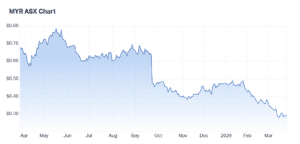
- At its peak, Myer had over $3 billion in lease liabilities
- These stretched over 15+ years across ~70 stores
- These fixed commitments reduced flexibility when conditions deteriorated
👉 The result?
Those liabilities didn’t just sit there—they magnified the decline of the department store model.
Today, Myer is a much smaller business, with:
- Reduced lease obligations
- Fewer stores
- A potential turnaround story
But it’s a classic lesson:
A weak balance sheet can destroy even the biggest companies.
2. Healthy working capital (short-term strength)
More commonly, problems appear in the current part of the balance sheet.
This is where we focus on:
👉 Current Assets vs Current Liabilities
A strong company should be able to:
- Meet short-term obligations
- Fund operations
- Invest in growth
If it can’t → it risks:
- Dilution
- Emergency capital raisings
- Becoming a forced seller of assets
Case Study: Growth follows balance sheet strength
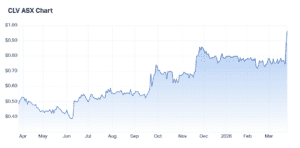
One of the best examples we’ve seen is Clover Corporation (CLV)
 .
.
Clover provides encapsulation technology used in:
- Infant formula
- Nutritional products
Here’s what changed:
- Previously: balance sheet constraints limited growth
- After improvement:
- Current assets ≈ 5x current liabilities
- Investment in R&D accelerated
- Product range expanded from 2 to 20+ products
- Global expansion followed
👉 The result?
The share price doubled after our upgrade to Buy
This wasn’t luck.
It was balance sheet strength unlocking growth.
Why balance sheets matter in tough situations
Strong balance sheets don’t just drive growth, they provide resilience.
Example: capital strength in action
Companies like TPG Telecom Limited raised significant capital ahead of major strategic moves.
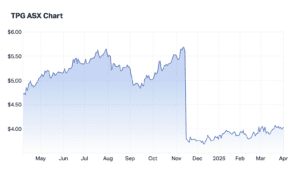
- ~$400 million raised
- Positioned to withstand regulatory delays
- Not forced into bad decisions
👉 That’s the difference:
- Weak balance sheet = forced decisions
- Strong balance sheet = strategic flexibility
Example: riding through disappointment
Take Amplitude Energy (AEL):
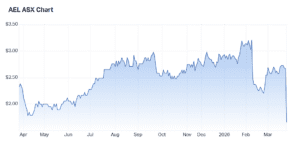
- A disappointing dry well result
- Share price weakness
But:
- Positive free cash flow
- Ongoing gas revenue
- Investment covered internally
👉 This gives investors confidence to:
- Hold through volatility
- Avoid panic selling
- Potentially buy weakness
Avoid this critical mistake
One of the biggest risks in small-cap investing:
👉 Being a forced seller
This happens when:
- A company runs out of cash
- Needs emergency funding
- Dilutes shareholders
Or worse:
- Investors panic and sell at the bottom
A strong balance sheet prevents this.
Survival and success
If you take one thing away, it’s this:
👉 Balance sheet strength determines survival and success
It allows companies to:
- Withstand downturns
- Fund growth
- Avoid dilution
- Create long-term shareholder value
At Under the Radar Report, this is why we:
- Analyse every balance sheet in detail
- Assign risk ratings
- Focus on financially strong opportunities
Want our best stock ideas?
We’ve already done the work screening thousands of ASX stocks to find:
- High-quality small caps
- Strong balance sheets
- Real growth potential
- Weekly Small Cap Reports
- Top stock picks
- Analyst insights and price targets
- Portfolio strategy