



Richard is an experienced equities analyst, stockbroker, and financial editor, having worked for over 30 years in finance.
Firmus and DXN: Can AI hype turn into profits?
Firmus and DXN: Can AI hype turn into profits?”
After a series of small cap conferences, Richard Hemming looks at two very different AI stories and asks whether investor expectations are running ahead of delivery.
I have just returned from a series of small cap conferences, and AI was on everyone’s mind. Even whisky maker Lark Distilling found AI in the conversation.
The enthusiasm is understandable. AI needs data centres, computing power and enormous amounts of capital. It also raises a familiar question for investors: how much should you pay today for growth that a company still has to deliver?
That question matters even more as the Reserve Bank of Australia prepares for this week’s interest rate decision. The cash rate is currently 4.35%. A further 0.25 percentage point increase would take it to 4.60%, making the cost of capital harder to ignore.
DXN: Contracts are only the beginning
Consider DXN Limited, which manufactures and operates modular data centres. Its shares have risen sharply as investors respond to reported contract wins involving US neocloud operators.

Winning a contract is an achievement. Building the data centres, delivering them on time and turning that work into profit is another challenge.
DXN remains loss making. Its reported contract backlog gives it work to deliver, but investors also need to consider the cash required to fulfil those orders and support the business in the meantime. In my view, a capital raising is a real possibility. I would want to see the terms of any raising, and clearer evidence of profitable delivery, before deciding what the shares are worth.
Firmus: An extraordinary opportunity with extraordinary demands
Then there is Firmus, the Australian AI infrastructure company preparing for a major sharemarket listing. Its connection with Nvidia and its ambitious data centre plans have attracted enormous attention. Reports have pointed to a potential valuation of around US$50 billion.
The scale of the opportunity is striking. So is the scale of the work ahead. Firmus will need to fund, build and operate facilities that require vast amounts of equipment and electricity. Reported projections of roughly US$35 billion in capital spending on servers alone show how much has to happen before the full growth plan can be realised.
Investors should pay particular attention to the financial forecasts. A reported 90% projected EBITDA margin is an eye catching figure, but it is a forecast for a developed business, not a measure of profit being earned today. The prospectus will be the key document for testing the assumptions behind that forecast, the funding plan and the risks.
The amount of stock available to trade after the IPO matters too. A limited free float can intensify demand and drive a sharp move in the share price. It does not, by itself, tell us whether the underlying valuation is justified.
GYG Share price chart: 28 September 2026

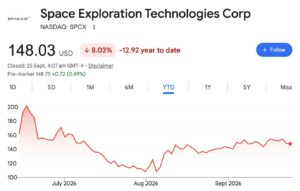
Space X since IPO: 28 September 2026
Watch the delivery, not just the demand
AI demand may prove substantial. For investors, the next question is which companies can meet that demand at an attractive return after paying for equipment, energy, staff and financing.
DXN and Firmus sit at very different stages and scales, but they invite the same discipline. Look beyond the excitement. Follow the cash requirements. Test the forecasts. Above all, separate a compelling story from a business that has delivered on it.
We will be watching both companies closely as more information becomes available.